Provides information on all things social work, including direct practice (both clinical and community organizing), research, policy, education... and everything in between.
[Episode 136] In today's Social Work Podcast, we speak with Allan Cole about his experiences with Young-Onset Parkinson's Disease.
Parkinson's Disease affects nearly 1 million people in the United States and more than 6 million people worldwide. It is a a progressive neurological disorder that primarily affects movement. I’m releasing this episode in April because April is Parkinson's Disease Awareness Month, chosen because it is the birth month of James Parkinson, who first identified the symptoms of Parkinson's disease more than 200 years ago.
Full disclosure – before this episode I knew that my childhood hero Muhammad Ali and the actor Michael J. Fox had Parkinson’s, but I didn’t know they had Young Onset Parkison’s Disease. I also assumed that it was a terminal illness that significantly decreased your lifespan like Multiple Sclerosis (MS) (https://www.mayoclinic.org/diseases-conditions/multiple-sclerosis/symptoms-causes/syc-20350269) and ALS (aka Lou Gehrig’s Disease). I was wrong.
And that’s why I spoke with Allan Cole, a person who lives with Young-Onset Parkinson's Disease. He also serves as the Dean of the Steve Hicks School of Social Work at the University of Texas at Austin. And, as you’ll hear in today’s episode, Allan's personal and professional journey is one of vulnerability and profound empathy, qualities that resonate deeply within the social work community.
In today’s episode, Allan shares his personal journey with Young-Onset Parkinson’s Disease, acknowledging diversity of experiences people have with Parkinson’s. We explore the emotional landscape of receiving a Parkinson's diagnosis, the misconceptions surrounding the disease, the difference between disease and illness, living well with Parkinson’s, the need for more research and awareness, what social workers should know about working with people with Parkinson’s Disease, and the importance of empathy and support in navigating its challenges. I appreciated how Allan spoke about his journey in the context of his many privileges, acknowledging that his ability to be vulnerable was a manifestation of his privilege.
In the years since his diagnosis, much of Allan’s scholarship and advocacy has centered around caring for people living with Parkinson’s disease. He has written or edited several texts on Parkinson’s disease, including the 2021 Oxford University Press book, Counseling Persons with Parkinson’s Disease, and two books on lessons learned from Parkison’s Disease: Discerning the Way (Cascade, 2021), and Jumping to the Skies (Cascade, 2023). He also has two books of poetry, Riding the Wave (Resource Publications, 2023) and In the Care of Plenty (Resource Publications, 2021). He moderates a website called PDWise.com, a hub he created for sharing personal stories, experiences, and wisdom gained from living with Parkinson’s, which encourages personal connections and opportunities for learning.
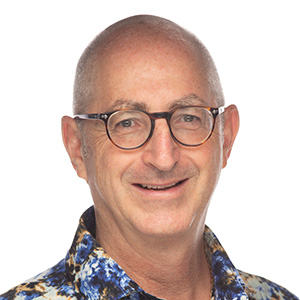
[Episode 130] Today’s episode is about the 2021 revision of the NASW Code of Ethics to include self-care and cultural humility. To unpack these two new additions, I spoke with Allan Barsky, Professor of Social Work at Florida Atlantic University and former Chair of the National Ethics Committee of the National Association of Social Workers.
Allan Barsky received his Ph.D. from the University of Toronto Faculty of Social Work, his MSW from the Wurzweiler School of Social Work at Yeshiva University, and his Juris Doctor from the University of Toronto Faculty of Law. His teaching and research interests include social work practice theory and skill development, pedagogy, conflict resolution, professional ethics, and substance abuse. His book credits include Ethics and Values in Social Work (Oxford University Press), Clinicians in Court (Guilford Press), Conflict Resolution for the Helping Professions (Oxford University Press), Interprofessional Practice with Diverse Populations (Greenwood), Successful Social Work Education: A Student’s Guide (Cengage), and Alcohol, Other Drugs and Addictions (Cengage). Dr. Barsky was awarded the “Distinguished Teacher of the Year” by CDSI students in 2005 and 2020, the “Researcher of the Year – Scholarly and Creative Works” by FAU in 2007, and FAU Scholar of the Year in 2020. Dr. Barsky chaired the National Association of Social Workers “Code of Ethics Review Committee” (2016-2017) and was awarded NASW’s “Excellence in Ethics Award” (2015).
[Episode 118] In today’s episode, I talk to Erlene Grise-Owens, Justin “Jay” Miller, and Mindy Eaves, the editors of the TThe A-to-Z Self-Care Handbook for Social Workers and Other Helping Professionals, published by The New Social Worker Press. My guests debunk some self-care myths and they share some of the guidelines about making self-care a practice. My guests not only talk about what self-care is and is not, but they also model it. We talk about SMART self-care plans, about how being active is not the same as being athletic, about how personal self-care requires professional self-care and that professional self-care affects organizational wellness and that organizational wellness affects professional self-care.
In today's episode, Allan and I talked about 1.06(g) – professional affiliations and the removal of the word “disability." Allan talks about the difference between baseline standards – don’t have sex with your clients, and aspirational standards – the ideal world in which, for example, we will always be promoting social justice. We talked about section 1.15 – disruption in electronic communications. We ended with a discussion of resources, such as the free NASW webinar on changes to the 2018 NASW Code of Ethics, and ways that you can provide feedback about things that you like or don’t like about the 2018 NASW Code of Ethics. Allan encourages people to be involved in the many online discussions of ethics. He encouraged folks to read and write articles for the Journal of Social Work Values and Ethics and other sites.
In Part 2, episode 114, we talk about Section 1.04(e) knowing the laws in your jurisdiction and the one where your client lives and how that affects practicing across state lines with or without technology. We also talk about 1.05, cultural competence.
In Part 3, episode 115, we talk about 1.06(g) – professional affiliations, and the removal of the word “disability”. We talk about 1.15 – disruption in electronic communications. We end Part 3 with a discussion of resources for folks who want to learn more about the NASW Code of Ethics, and ethical issues in social work practice.
[Episode 112] Today's episode of the Social Work Podcast is about the parallels between social workers and superheroes. I spoke with John Vassello. John is the Associate Director of Field Education and Admissions in the Binghamton University Department of Social Work. He also serves as the Continuing Education Coordinator.
John and I talk about an innovative approach to marketing the University of Binghamton's social work program AND the buzz he creates at conferences and recruitment events, all with squishy little superhero stress dolls.
John connects the dots between superheroes (origin stories, secret identities, costumes, code of ethics, and more) and the life and times of social workers.
You can purchase a complete set of the Social Justice League superheroes, all proceeds funding Binghamton social work student scholarships, here: bit.ly/SocialJusticeLeague.
[Episode 100] Today's episode of the Social Work Podcast is about private practice. My guest, Dr. Julie Hanks, LCSW is the founder and executive director of Wasatch Family Therapy. She is a columnist at HealthyWay.com, Answers.com, and PsychCentral where she writes about private practice. She seems to be on speed dial for national media outlets like the Wall Street Journal, Market Watch, HuffingtonPost Live, and magazines like Cosmopolitan, Health, Health and dozens of others. Dr. Hanks has developed a 6-week e-course called Rock the Media School which is designed to help health and mental health practitioners build their online presence through media interviews, blogging, and building an engaged social media following. Get details at RockTheMediaSchool.com. She is the author of the 2016 book, The Assertiveness Guide for Women: How to Communicate Your Needs, Set Healthy Boundaries, and Transform Your Relationships
In today's interview Danna and I talk about what makes a social worker a clinical social worker, what distinguishes a good from a bad clinical social worker, the one essential thing that all social workers bring to supervision, and the role of narcissism, observing ego, transference, counter-transference and the real relationship in clinical social work. We end with a discussion of money and how social workers need to earn enough so they can be present with their clients.
@socworkpodcast Holy #99 podcast. LOVED Danna Bodenheimer's interview. Buying the book ASAP. Thank you.
[Episode 95] Hey there podcast listeners. March is Social Work Month. I know, you’re saying, but every month is social work month. Yes… that’s true… for social workers. But, social work is one of those professions that, to misquote Ogden Rogers [Episode 88], if you’re doing it well, people don’t know you’re doing it. so, let’s have a month to remind the general public of what social workers do. In that spirit, today’s episode is a quick and dirty rundown of some of the things I do for social work and some of the things I’m involved in that make social work a better profession. So, this episode is a quick and dirty rundown of upcoming episodes, resources for social work and technology, and information about my book, Suicide in Schools, published by Routledge Press in December 2014.
NASW’s theme for Social Work Month 2015 is “social work paves the way for change.” I love our profession and all that we do to pave the way for change for the oppressed, marginalized, and underrepresented in our society. I also recognize that there are social workers who have paved the way for me to change. So, every day this month I’m honoring a different social worker who has inspired me and helped me to change so I can be a better social worker. You can see my list of social workers on the Social Work Podcast Facebook page at http://www.facebook.com/swpodcast, the Twitter feed @socworkpodcast.
Upcoming episodes:
•Attachment-Based Family Therapy: Guy Diamond & Suzanne Levy
•Cognitive Enhancement Therapy: Shaun Eack
•Working with Deaf People: Teresa Crowe Gualladet
•The Contribution of the Children's Bureau to Social Work Education: Alice Lieberman
•Social Innovation: Steve Anderson
•Suicide in Schools: Terri Erbacher
NASW is launching a series of Tweet Chats. Tweet chats are opportunities for people to gather on Twitter at a specified time and use a specific hashtag (that symbol that we used to call the “pound sign”) and discuss a specific topic. I’m honored to be the NASW Tweet Chat guest on April 2nd talking about “Suicide in Schools.” Laurel Hitchcock has a wonderful guide for how to participate in a Tweet Chat. If you like it, you can participate in lots of Tweet chats. Well-established tweet chats specific to social work include:
Suicide in Schools provides school-based professionals with practical, easy-to-use guidance on developing and implementing suicide prevention, assessment, intervention and postvention strategies at the individual, family, school, and community level. The book includes detailed case examples, guidelines, handouts, and internet resources on the best approaches to effectively working with youth who are experiencing a suicidal crisis as well as those students, families, school staff, and community members who have suffered the loss of a loved one to suicide. Here are some reviews of the book:
"This book provides the exact kind of practical information school staff need to know, from how to tell a parent his or her child is contemplating a suicidal act to what the school staff member's responsibility is to the child, the parent, and to the community to address suicidal risk. When combined with the detailed case examples that really bring an extra dimension to the step-by-step guides, this book becomes a must-read for any professional working in a school environment." Thomas Joiner, PhD, Robert O. Lawton Professor of Psychology at Florida State University and director of the Laboratory for the Study and Prevention of Suicide-Related Conditions and Behaviors
"A comprehensive guide for all educators seeking the current evidenced-based, model practices for suicide prevention in schools. The ‘expert tips’ reflect a wealth of knowledge gleaned from the front lines, where collaboration is essential between school psychologists, social workers, counselors, and their administrators. The authors paraphrase our national motto: ‘Everyone in the school plays a role in suicide prevention!’" Richard Lieberman, NCSP, school psychologist/consultant with the Los Angeles County Suicide Prevention Network
"Suicide in Schools is an essential, invaluable resource for all school personnel who are interested in preventing self-harm among their students. User-friendly, yet erudite, the book serves as a manual for evidence-based and innovative practices. If only this reference had been available when, as president of the National Association of School Psychologists, I issued a call to action to prevent suicide." Ralph E. (Gene) Cash, PhD, ABPP, professor at the Center for Psychological Studies and director of the School-related Psychological Assessments and Clinical Interventions Clinic at Nova Southeastern University
"This book provides a comprehensive examination of the many issues that schools face in working with suicidal youth and provides hands-on strategies that have been successfully implemented in school-based settings. The authors provide excellent case examples and practical information that aligns with clinical and research experts in the field of youth suicidal behavior. Finally, the authors structure their book to extensively explain how a multi-tiered approach can be implemented for suicide prevention, risk assessment, and management of youth suicidal behavior. This book provides exactly the help school personnel need to feel more confident in working with high-risk youth and thus is an invaluable resource for anyone working in the schools and/or working with them. It already has a place on my desk." James J. Mazza, PhD, professor and director of the school psychology program at the University of Washington
Thanks for all that you do, social workers. We’re an amazing and storied profession. Happy social work month. And keep up the good work.
[Episode 89] Today’s episode of the social work podcast about Cystic Fibrosis, or CF. We’re looking at CF in two parts. In Part I we learn about this chronic, terminal illness. In Part II we learn about what social workers can do when working with people with CF.
There are about 30K people in the USA with CF, 75% of whom were diagnosed as babies, and half of whom are over the age of 18. CF is a genetic progressive chronic disease. People are born with it. The disease causes the body to produce thick and sticky mucous in the lungs and wreaks havoc on the digestive system, pancreas, bone density and other things. Because of this thick mucous in the lungs, people often describe having CF like breathing through a straw. This mucous leads to chronic lung infection, loss of lung functioning, and disability and death. In the 1980s children born with CF could expect to live until they were about 12 years old. The life expectancy for someone born with CF in 2014 is 38 years old. Treatment for CF includes daily medications, breathing treatments and chest physical therapy in the form of a mechanized vest that helps break up the mucus. In some cases people with CF need lung transplants.
So, those are the stats. But what does it mean to live with CF, and what should social workers know about working with people with CF? I’m delighted to say that for today’s episode of the Social Work Podcast I found the ideal guest. Elizabeth Shuman is a licensed clinical social worker who works as at the Grove School in Madison, CT. She also has CF.
[Episode 87] In today's social work podcast, we're looking at the beginning, middle, and end of social work. No, this is not an apocalyptic tale of burning towers of progress notes and zombie utilization managers... although that does sound kind of interesting. No. Today’s episode is much more innocent than that. Ask any social worker, first year undergrad or emeritus professor, “what are the most basic phases of social work?” They will tell you: beginning, middle, and end. In today's Social Work Podcast we hear excerpts from a collection of poems and short stories called Beginnings, Middles & Ends: Sideways Stories on the Art & Soul of Social Work, written by Ogden W. Rogers, Ph.D., LCSW, ACSW, Professor and Chair of the Department of Social Work at The University of Wisconsin-River Falls, and published in 2013 by White Hat Communications. Ogden has written a beautiful little collection of stories from his 30 years of social work experience. Of the 99 stories in his collection, we’ll hear six, two each from Beginnings, Middles, and Ends.
[Episode 77] Despite the fact that social workers are on the front lines and behind the scenes in nearly every facet of life, we're mostly invisible in the entertainment and news media. And when we do show up in the news, it is rarely good. In order to get an idea of what social workers could do to make a difference, I decided to go to the source - a journalist.
In today's episode of the Social Work Podcast, I speak with award-winning journalist, Maiken Scott from WHYY in Philadelphia. Maiken starts by describing what she does – a day in the life of a reporter. She talks about how she finds experts to interview. We talked about how social workers can combat this misperception that social workers are the same as child welfare workers. She encouraged social workers to become advocates for their own professions. She points out that psychology, medicine, and nursing gets all sorts of information to reporters. Social work does not. She talked about what she looks for in a "good interview." We ended with Maiken's ideas for how social workers could influence the stories that are heard in the media.


 [Episode 130] Today’s episode is about the 2021 revision of the NASW Code of Ethics to include self-care and cultural humility. To unpack these two new additions, I spoke with


