Provides information on all things social work, including direct practice (both clinical and community organizing), research, policy, education... and everything in between.
[Episode 150] In today’s episode I’m talking with Carrie Pettus, chair of the
executive board for the Grand Challenges for Social Work. Today’s episode explores the 10-year journey of the Grand Challenges for Social Work, reflecting on its evolution, its measurable impacts, and the critical lessons learned along the way. Carrie talks about successes, including creating a vast social and professional network dedicated to solving some of the most persistent social problems, and some of the challenges, including the difficulty defining and measuring impact, which she acknowledges is ironic given that the initiatives are lead by some of the leading scholars in the world. She also acknowledges some of the misses, such as uneven involvement of frontline social workers and not including an initiative explicitly focusing on eliminating racism until a few years ago. We end the conversation with Carrie discussing the importance of sustainability and resources if the Grand Challenges for Social Work initiative is to continue for another 10 years.
Thank you to Elizabeth Gillette for coordinating and being part of the interview.
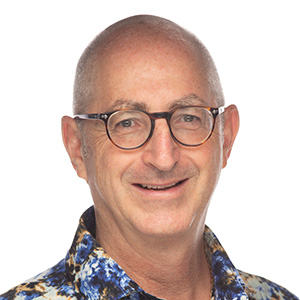
[Episode 130] Today’s episode is about the 2021 revision of the NASW Code of Ethics to include self-care and cultural humility. To unpack these two new additions, I spoke with Allan Barsky, Professor of Social Work at Florida Atlantic University and former Chair of the National Ethics Committee of the National Association of Social Workers.
Allan Barsky received his Ph.D. from the University of Toronto Faculty of Social Work, his MSW from the Wurzweiler School of Social Work at Yeshiva University, and his Juris Doctor from the University of Toronto Faculty of Law. His teaching and research interests include social work practice theory and skill development, pedagogy, conflict resolution, professional ethics, and substance abuse. His book credits include Ethics and Values in Social Work (Oxford University Press), Clinicians in Court (Guilford Press), Conflict Resolution for the Helping Professions (Oxford University Press), Interprofessional Practice with Diverse Populations (Greenwood), Successful Social Work Education: A Student’s Guide (Cengage), and Alcohol, Other Drugs and Addictions (Cengage). Dr. Barsky was awarded the “Distinguished Teacher of the Year” by CDSI students in 2005 and 2020, the “Researcher of the Year – Scholarly and Creative Works” by FAU in 2007, and FAU Scholar of the Year in 2020. Dr. Barsky chaired the National Association of Social Workers “Code of Ethics Review Committee” (2016-2017) and was awarded NASW’s “Excellence in Ethics Award” (2015).
[Episode 129] Today’s episode is about the Power of Podcasting in Social Work Education. Shimon Cohen, founder and host of Doin' The Work: Frontlines of Social Change, and I read the article we wrote for New Social Worker Magazine about podcasting for social work education, taking a few detours along the way to explain what is on the written page.
[Episode 116] Today's episode of the Social Work Podcast is about social media and gang violence. It is about 8 million tweets, cyberbanging, and using social media to get a 360-degree view of someone’s life. It is about the amazing research of Dr. Desmond Patton.
Dr. Patton's research uses qualitative and computational data collection methods to examine how and why gang violence, trauma, grief, and identity are expressed on social media and the real world impact they have on well-being for low-income youth of color.
Desmond and I spoke in January of 2017. He unpacked the complex relationship between gang banging and cyberbanging – a term he and his colleagues coined back in 2013. We also talked about how social workers can think about the relationship between social media and youth. Desmond encourages us to think of the online world as a new social environment that social workers need to understand. He questions existing agency policies that prohibit social workers from interacting with clients on social media and asks if those are empirically-sound policies. And one of the things that I love the most about Desmond’s work is that he combines the rich understanding that comes from qualitative research and the cutting edge insights that can come from analyzing big data.
[Episode 83] In today's Social Work Podcast I speak with Dr. Gail Wyatt, pioneering sex researcher, award-winning teacher, mentor, and researcher, and the first African-American woman to be licensed as a psychologist in the state of California. I spoke with Dr. Wyatt in April 2010 when she was at Temple University giving a talk about her research with African American HIV serodiscordant couples. Serodiscordant couples are those in which one partner is HIV positive and the other is HIV negative. Dr. Wyatt and her co-investigators had just concluded an 8-years investigation of a couples therapy intervention that they hoped would reduce HIV/STD risk behaviors in African American HIV serodiscordant couples. They called the intervention Eban which is "a traditional African concept meaning 'fence,' a symbol of safety, security, and love within one's family and relationship space" (El-Bassel et al., 2010, p. 1596) The Eban intervention combined components of social cognitive theory, historical and cultural beliefs about family and community preservation, and an Afrocentric paradigm. If you want to read more about the Eban intervention or the results of this clinical trial I’ve posted the links to those and related articles on the Social Work Podcast website. So, you’re probably wondering, after 8 years did it work? Yes. At the end of 8 years, and 535 couples later, the couples that were part of the Eban intervention used condoms more frequently and more consistently and reported fewer sexual acts without condoms than the couples in the health promotion comparison group. And I have no doubt that when the researchers finished running those analyses, they went "Phew! Thank Goodness!"
For today's interview, Dr. Wyatt and I talked a bit about the research, but mostly we talked about two of the techniques that were used in the clinical trial. The first was a way of having couples plan and enjoy safe sex. The second had to do with addressing past histories of abuse within the context of a consensual sexual relationship. It was at this point that the conversation moved away from couples therapy into a conversation about healthy sexual behaviors. Dr. Wyatt made the point that most health and mental health providers ask about a client's "age of first sexual contact" without distinguishing between consensual and non-consensual sexual contact. She pointed out that adolescents sometimes do not distinguish between the two. She encouraged providers to be more precise in their questions, and to find out if their clients are current victims of sexual abuse. We about how to include adolescent clients in mandated abuse reporting calls if current abuse is uncovered, and how to address the issue of sex among adolescents who are victims of past or current sexual abuse. And, as usual, I asked Dr. Wyatt if she could provide some resources for people who were interested in learning more, and she was happy to oblige.
[Episode 63] Today's Social Work Podcast is a broad overview of current policies and practices associated with adoption in the United States. According to the Evan B. Donaldson Institute, 6 in 10 Americans have had experience with adoption, meaning you, or a family member or close friend was adopted, adopted a child, or put a child up for adoption. Although most Americans have experience with adoption, as you'll hear in today's interview, the world of adoption is incredibly complex. For example, is it ever acceptable to consider the race of a prospective adoptive family when making placement decisions? For example, you're looking to place an African American child. You have three prospective adoptive families - two African American and one White. Assuming all things are equal, could you use race as an exclusionary criterion? What about if the child was White, Latino, or Native American? If you know the answer - congratulations. If not, keep listening. And even if you know the answer, keep listening.
[Episode 59] Today’s Social Work Podcast is on incorporating religion and spirituality into social work practice with African Americans. Or at least that’s the official title. The unofficial title is, “If my client brings God into the conversation, what should I do?” I spoke with Nancy Boyd-Franklin, best-selling author, multicultural researcher, family therapist and clinical trainer, and recipient of awards from the American Psychological Association, Association of Black Psychologists, and the American Family Therapy academy.
When I was a social work intern, I worked with an African American mother who had AIDS and whose 6 children were HIV+. The father of her children had been an IV drug user who had died of AIDS. The mother was in poor health, and rarely sought her own treatment. I had a hard time tracking her down because she spent most of the day, every day, on public transportation with one child or another taking them to and from medical appointments. I remember being on the bus with her one day (because that was only place I could meet with her), listening to her talk about how she had successfully fought hospital administration to get treatment for one of her kids. Being the eager social work student that I was, fully prepared to acknowledge my clients strengths and resources, I told her that I was in awe of her strength. “How do you do it?” I asked her. Her response totally caught me off guard...
Today’s Social Work Podcast is on Suicide and Black American Males. Why suicide and Black Americans? Well, there is a belief among most Americans, and particularly among African American adults, that Black Americans do not kill themselves (Joe, 2006). When we think of violent death among Black Americans we think of homicide. Suicide is thought of as a “White” problem. While it is true that suicide was not a leading cause of death for African Americans 40 years ago, today it is the third leading cause of deaths among African Americans 15 – 24 years of age. So why Black American Males specifically? Well, among all racial and ethnic groups, the suicide rate is lowest among Black American females. Given that Black American males, particularly youth, are over-represented in social services, social workers need to be aware of the risk for suicide, and prepared to provide potentially life-saving services. One thing that makes social workers professionals is that we are trained to see things that others do not. Most of us have not been trained to see suicide as an important issue in the Black American community. It is my hope that after hearing today’s guest, Dr. Sean Joe, you will be more likely to see suicide among Black American males as an important clinical and programmatic issue.
Sean Joe, PhD, MSW, joined the Brown School in Fall 2014 as the Benjamin E. Youngdahl Professor of Social Development. His research focuses on Black adolescents' mental health service use patterns, the role of religion in Black suicidal behavior (NIMH), salivary biomarkers for suicidal behavior, and development of father-focused, family-based interventions to prevent urban African American adolescent males from engaging in multiple forms of self-destructive behaviors (e.g., suicidal behavior). When this interview was recorded, Dr. Joe held a joint position as associate professor in the School of Social Work and the Department of Psychiatry at the University of Michigan's School of Medicine. He also served as a faculty associate and Associate Director for Research and Training at the Program for Research on Black Americans at the Institute for Social Research, University of Michigan. Dr. Joe is a nationally recognized authority on suicidal behavior among African Americans. He is the 2009 recipient of the Edwin Shneidman Award from the American Association of Suicidology for outstanding contributions in research to the field of suicide studies and the 2008 recipient of the Early Career Achievement Award from the Society for Social Work and Research. He has published in the areas of suicide, violence, and firearm-related violence. Dr. Joe served on the board of the Suicide Prevention Action Network (SPAN USA), the scientific advisory board of the National Organization of People of Color Against Suicide, and the editorial board of Advancing Suicide Prevention, a policy magazine. He is the Founder and Director of the Emerging Scholars Interdisciplinary Network, a national interdisciplinary and mutli-ethnic professional development network for early career social and behavior scientist.
In today's podcast, Sean talks why it is important to look at the suicide rate among Black American males, specifically adolescent males. He talks about how recent research has started to put together a profile for Black American Males most at risk for suicide, and the factors that seem to protect against suicide. He talks about some of the social and historical factors associated with the increase in suicide rates among Black Americans. Sean gives an example of how he talks with Black Americans about suicide and stigma. We talked about recommendations for social workers who are working with Black American males who might be suicidal, including talking about faith, valuing that child, having a vision of that child as an adult, and healthy masculinity. Sean discussed some resources for social workers interested in learning more about this topic. We ended the interview with Sean extending an invitation to social work clinicians and researchers to join him to better understand suicide and suicidal behaviors in Black Americans.
One quick word about today’s podcast: I recorded today’s podcast using a Zoom H2 recorder on location at the Society for Social Work Research (SSWR) annual conference. If you listen closely you can hear the sounds of San Francisco in the background: a clock chiming, buses loading and unloading passengers, and even some pigeons congregating outside of the interview room. They don’t detract from the interview, but I wanted to give fair warning in case you were listening to this podcast anywhere were those sounds might be cause for alarm. So, without further ado, on to episode 56 of the social work podcast, Suicide and Black American Males: An Interview with Sean Joe, Ph.D., LMSW
[Episode 48] In today's podcast, I speak with Dr. Elaine Congress, and Fernando Chang-Muy, JD about their 2008 text from Springer publications, Social Work with Immigrants and Refugees: Legal Issues, Clinical Skills and Advocacy(note: a second edition was published in 2015). We talk about why they thought it was important to have legal and social work perspectives in a book on working with immigrants and refugees. We also talk about the interface between social services and legal system, how social workers and lawyers can work together when helping immigrants and refuges, and some of the ways that professionals can advocate for immigrants and refugees at a policy level. Elaine and Fernando ended our conversation with some ideas about how the concepts discussed in today’s podcast and the book can be applied to people who live in countries other than the United States. Related podcast: Listen to Elaine Congress talk about using her visual assessment tool, the Culturagram, when working with immigrants and refugees.
[Episode 46] In today's podcast I speak with Dr. Elaine Congress about her creation, the Culturagram. Elaine and I talk about how and why she developed the culturagram, the ten assessment areas of the culturagram, and how social workers can use the culturagram to improve their services. We end the podcast with a discussion about research and resources about the culturagram.
Dr. Congress has provided a copy of the Culturagram that you can look at while listening to the podcast, or when thinking about your clients. Please see below to view the Culturagram.
[Episode 36] Today's podcast is on Race and Social Problems. On January 15, 2008, I spoke with Dr. Larry E. Davis, Dean of the School of Social Work at the University of Pittsburgh, the Donald M. Henderson Professor, and Director of the Center on Race and Social Problems. In our conversation, Dean Davis defined racism, the role of race in understanding social problems, and about how issues of race may or may not change as the percentage of whites in the United States continues to decrease discussed. We talked about some of the racial and gender issues in the current election and talked about how race is different from gender as a point of diversity. We also talked about race and social work, and what social workers can do to fight racism. We ended our conversation with a discussion of the Center on Race and Social Problems and what the Center is doing to fight racism.


 [Episode 130] Today’s episode is about the 2021 revision of the NASW Code of Ethics to include self-care and cultural humility. To unpack these two new additions, I spoke with


