Showing posts with label Empirically supported interventions. Show all posts

Sunday, July 6, 2025

Experimental Research Design (Part 2): Interview with Bruce Thyer, PhD, LCSW

Photo of Bruce Thyer
[Episode 145] Today’s episode is the third of a three-part series on research design (and the second of a two-part series on Experimental Research Design) with Dr. Bruce Thyer, Distinguished Research Professor and former Dean with the College of Social Work at Florida State University.
 
Dr. Thyer is a Distinguished Research Professor and former Dean with the College of Social Work at Florida State University. He is also an Extra-Ordinary Professor with North-West University in the Republic of South Africa and an adjunct faculty member with the Tulane University School of Social Work. Previously he held the position of Distinguished Research Professor at the University of Georgia. Dr. Thyer received his MSW from the University of Georgia and his Ph.D. in Social Work and Psychology from the University of Michigan. He is a Licensed Clinical Social Worker in Florida and Georgia and he is a Board Certified Behavior Analyst. Dr. Thyer has been a long-term promoter of the evidence-based practice model within social work. His work is largely informed by social learning theory and has taken a recent turn in the direction of exposing and discouraging pseudoscientific theories, interventions and assessment methods within social work practice.

Download MP3 [19:16]

Tuesday, July 1, 2025

Experimental Research Design (Part 1): Interview with Bruce Thyer, PhD, LCSW

Photo of Bruce Thyer
[Episode 144] Today’s episode is the second of a three-part series on research design (and the first of a two-part series on Experimental Research Design) with Dr. Bruce Thyer, Distinguished Research Professor and former Dean with the College of Social Work at Florida State University. Today's episode is all about experimental research
 
Dr. Thyer is a Distinguished Research Professor and former Dean with the College of Social Work at Florida State University. He is also an Extra-Ordinary Professor with North-West University in the Republic of South Africa and an adjunct faculty member with the Tulane University School of Social Work. Previously he held the position of Distinguished Research Professor at the University of Georgia. Dr. Thyer received his MSW from the University of Georgia and his Ph.D. in Social Work and Psychology from the University of Michigan. He is a Licensed Clinical Social Worker in Florida and Georgia and he is a Board Certified Behavior Analyst. Dr. Thyer has been a long-term promoter of the evidence-based practice model within social work. His work is largely informed by social learning theory and has taken a recent turn in the direction of exposing and discouraging pseudoscientific theories, interventions and assessment methods within social work practice.

Download MP3 [21:37]

Monday, March 9, 2015

Attachment-Based Family Therapy (ABFT) for Depressed and Suicidal Youth: Interview with Guy Diamond, Ph.D., and Suzanne Levy, Ph.D.

[Episode 96] In today's Social Work Podcast I speak with two of the three developers of Attachment-based Family Therapy (ABFT), Guy S. Diamond, Ph.D. and Suzanne Levy, Ph.D. The third developer Gary M. Diamond (no relation to Guy Diamond) lives in Israel and was unavailable for the interview.

ABFT is the only family-based psychotherapy with empirical support for reducing suicidal ideation in youth. In today's interview, Dr. Diamond and Dr. Levy discuss the theory and practice of Attachment-Based Family Therapy. Dr. Diamond mostly covers theory and concepts, and Dr. Levy addresses the question of "what does the therapist actually do in the therapy room."

Download MP3 [50:36]


If you're interested in learning more about ABFT, you can buy the treatment manual Attachment Based Family Therapy for Depressed Adolescents, watch a free webinar http://youtu.be/KcwHznzq-S4, or attend a workshop (details on their website: https://abftinternational.com/)
ABFT is listed on the National Registry of Evidence-based Programs and Practices, also referred to as NREPP. According to NREPP, 
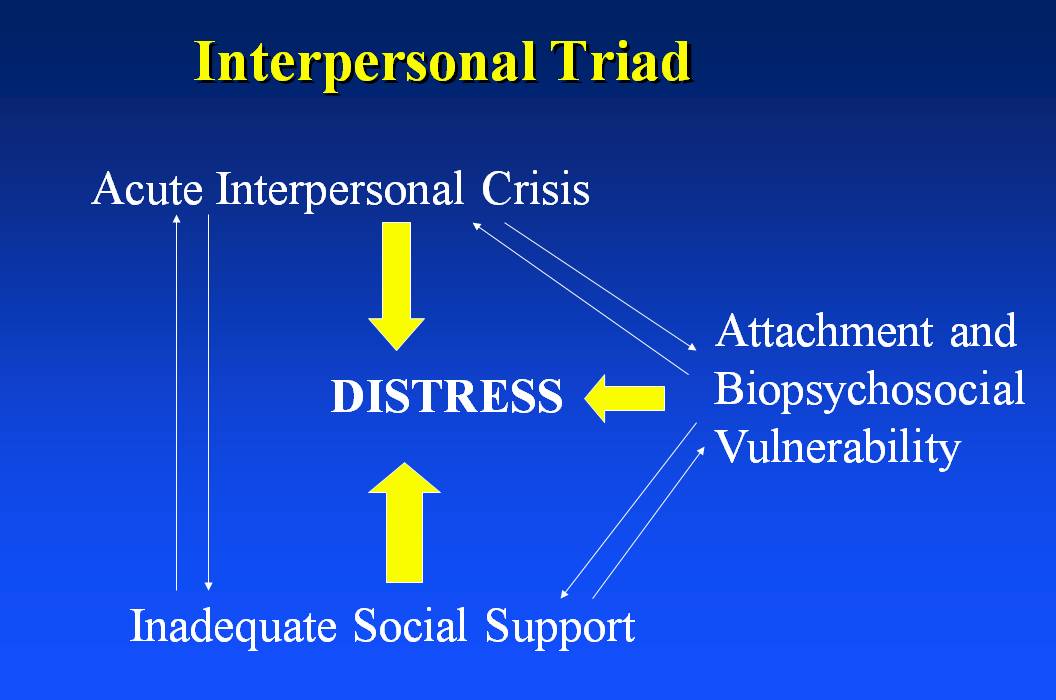
"Attachment-Based Family Therapy (ABFT) is a treatment for adolescents ages 12-18 that is designed to treat clinically diagnosed major depressive disorder, eliminate suicidal ideation, and reduce dispositional anxiety. The model is based on an interpersonal theory of depression, which proposes that the quality of family relationships may precipitate, exacerbate, or prevent depression and suicidal ideation. In this model, ruptures in family relationships, such as those due to abandonment, neglect, or abuse or a harsh and negative parenting environment, influence the development of adolescent depression. Families with these attachment ruptures lack the normative secure base and safe haven context needed for an adolescent's healthy development, including the development of emotion regulation and problem-solving skills. These adolescents may experience depression resulting from the attachment ruptures themselves or from their inability to turn to the family for support in the face of trauma outside the home. ABFT aims to strengthen or repair parent-adolescent attachment bonds and improve family communication. As the normative secure base is restored, parents become a resource to help the adolescent cope with stress, experience competency, and explore autonomy. 
ABFT is typically delivered in 60- to 90-minute sessions conducted weekly for 12-16 weeks. Treatment follows a semistructured protocol consisting of five sequential therapy tasks, each of which has clearly outlined processes and goals:
  1. Task 1: The Relational Reframe Task, with the adolescent and parents (or parent) together, sets the foundation of the therapy. After an assessment of the history and nature of the depression, the therapist focuses on relational ruptures. This shift pivots on the therapeutic question, "When you feel so depressed or suicidal, why don't you go to your parents for help?" The progression of this conversation leads parents and the adolescent to agree that improving the quality of their relationship would be a good starting point for treatment.
  2. Task 2: The Adolescent Alliance Task, with the adolescent alone, identifies relational ruptures in the family and links them to the depression. The adolescent is encouraged and prepared to discuss these often avoided feelings and memories with his or her parents.
  3. Task 3: The Parent Alliance Task, with the parents alone, explores their current stressors and their own history of attachment disappointments. These conversations activate parental caregiving instincts to behaviorally and emotionally protect their child, which helps motivate parents to learn and use new attachment-promoting parenting skills.
  4. Task 4: The Attachment Task, with the adolescent and parents together, creates an opportunity for the adolescent to directly express his or her thoughts and feelings about past and current relational injustices. Rather than defending themselves, parents help the adolescent fully express and explore these emotionally charged topics. This conversation helps the adolescent work through trauma, address negative patterns in the relationship, and practice new conflict resolution and emotion regulation skills.
  5. Task 5: The Autonomy Task, with the adolescent and parents together, helps consolidate the new secure base. In solving day-to-day problems, parents provide support and expectations and the adolescent seeks to develop autonomy while remaining appropriately attached to his or her parents." (http://legacy.nreppadmin.net/ViewIntervention.aspx?id=314)

Wednesday, September 11, 2013

Motivational Interviewing, 3rd Edition: Interview with Mary Velasquez, Ph.D.

[Episode 84] Today's episode of the Social Work Podcast is about Motivational Interviewing, Third Edition. In today's episode I speak with Mary Velasquez, Ph.D., Centennial Professor in Leadership for Community, Professional and Corporate Excellence and Director of the Health Behavior Research and Training Institute at the University of Texas at Austin. Dr. Velasquez is a trainer for the Motivational Interviewing Network of Trainers and has been involved in research that informed the changes to Motivational Interviewing, Third Edition. In today's interview Mary talks about how she became involved with Motivational Interviewing, what has changed and stayed the same in the revised version of Motivational Interviewing, DARN CATS, the four change processes, and how people can experience Motivational Interviewing in less than 15 minutes. 

Wednesday, August 7, 2013

Sex, Relationships, and HIV: Interview with Gail Wyatt, Ph.D.

[Episode 83] In today's Social Work Podcast I speak with Dr. Gail Wyatt, pioneering sex researcher, award-winning teacher, mentor, and researcher, and the first African-American woman to be licensed as a psychologist in the state of California. I spoke with Dr. Wyatt in April 2010 when she was at Temple University giving a talk about her research with African American HIV serodiscordant couples. Serodiscordant couples are those in which one partner is HIV positive and the other is HIV negative. Dr. Wyatt and her co-investigators had just concluded an 8-years investigation of a couples therapy intervention that they hoped would reduce HIV/STD risk behaviors in African American HIV serodiscordant couples. They called the intervention Eban which is "a traditional African concept meaning 'fence,' a symbol of safety, security, and love within one's family and relationship space" (El-Bassel et al., 2010, p. 1596) The Eban intervention combined components of social cognitive theory, historical and cultural beliefs about family and community preservation, and an Afrocentric paradigm. If you want to read more about the Eban intervention or the results of this clinical trial I’ve posted the links to those and related articles on the Social Work Podcast website. So, you’re probably wondering, after 8 years did it work? Yes. At the end of 8 years, and 535 couples later, the couples that were part of the Eban intervention used condoms more frequently and more consistently and reported fewer sexual acts without condoms than the couples in the health promotion comparison group. And I have no doubt that when the researchers finished running those analyses, they went "Phew! Thank Goodness!"

For today's interview, Dr. Wyatt and I talked a bit about the research, but mostly we talked about two of the techniques that were used in the clinical trial. The first was a way of having couples plan and enjoy safe sex. The second had to do with addressing past histories of abuse within the context of a consensual sexual relationship.  It was at this point that the conversation moved away from couples therapy into a conversation about healthy sexual behaviors. Dr. Wyatt made the point that most health and mental health providers ask about a client's "age of first sexual contact" without distinguishing between consensual and non-consensual sexual contact. She pointed out that adolescents sometimes do not distinguish between the two. She encouraged providers to be more precise in their questions, and to find out if their clients are current victims of sexual abuse. We about how to include adolescent clients in mandated abuse reporting calls if current abuse is uncovered, and how to address the issue of sex among adolescents who are victims of past or current sexual abuse. And, as usual, I asked Dr. Wyatt if she could provide some resources for people who were interested in learning more, and she was happy to oblige.

Monday, June 20, 2011

The Training and Education of Military Social Workers: Interview with Dr. Anthony Hassan

[Episode 68] Today's Social Work Podcast, The Training and Education of Military Social Workers, is the first of a two-part series. Part II, is a discussion of Cultural considerations in military social work. I'm doing this two part series because whether you agree or disagree with America n's involvement in what has now become the longest continuous combat engagement in its 235 year history, "There is an urgent need to understand and engage with the military service members, veterans, their families, and their communities in effective [social work] practices…" (CSWE, 2010, p. 2). I hear some of you right now; I'm reading your thoughts: you don't work for the Veterans Administration; you're not contracted by the military to provide services; you don't wear the uniform and serve in the armed forces. And yet, according to my guest, Anthony Hassan, you could still be a military social worker.

Wednesday, March 9, 2011

The Process of Evidence-Based Practice: Interview with Danielle E. Parrish, Ph.D.

[Episode 65] Today's episode of the Social Work Podcast is on the process of Evidence-Based Practice. I wanted to do an episode on Evidence-Based Practice because it has been the subject of a lot of debate in Social Work. One of the controversies is over how to define evidence based practice. In order to get some insight into the Process of Evidence-Based Practice, I spoke with one of social work's leading experts on the topic, Dr. Danielle Parrish, assistant professor with the University of Houston, Graduate College of Social Work. In today's interview, Danielle and I talked about the difference between the process of evidence-based practice and evidence-based practices, also known as empirically-supported treatments. We talked about why social workers should use the evidence-base practice process. Danielle identified some of the limitations of the EBP process, resources for social workers interested in accessing the evidence-base, and ways that social workers could support each other in being evidence-based practitioners.

Listeners of the Social Work Podcast, followers of the Social Work Podcast Twitter feed (@socworkpodcast), and fans on the Social Work Podcast Facebook page responded to a request to vote for their preferred definition of Evidence Based Practice. The results were surprising:

  Download MP3 [22:23]

Wednesday, March 2, 2011

How do you define Evidence-Based Practice?

[Update] Next week I'm posting an episode on Evidence-Based Practice. The interview is really nice and I think you'll really like it. With all episodes I do an intro where I introduce my guest, talk about why this topic is relevant to social workers, and then talk about what is covered in the interview. And so that's all well-and-good. Except that I've struggled with this intro because everyone seems to have a different understanding of what is Evidence-Based Practice.

So, this is where you come in. Twice.

First thing - at the top of this page you'll see that I've posted a poll. Take a minute – literally one minute – and select the definition of EBP you most agree with. I'm going to use the final tally in the introduction.

The second thing is I want to hear from you. I want to know how you use evidence-based practice in your social work practice. There's a very easy way to do this: call and leave a message on the Social Work Podcast answering machine – 215.948.2456. You can either dial the number directly, or go to make the call for free, on the upper right-hand side of the Social Work Podcast website click on the “CALL ME” button and Google will connect you to the answering machine for free. When you call, tell me your first name, where you're from, and what you think. If you can help me out with those two things – the poll and the voicemail, I'll be set for next week.

Thanks so much for listening to the Social Work Podcast, check back next week for the episode on Evidence-Based Practice, and keep on making a difference wherever you are.

  Download MP3 [01:55]


APA (6th ed) citation for this podcast:

Singer, J. B. (Host). (2011, March 2). How do you define Evidence-Based Practice? [Update]. Social Work Podcast. Podcast retrieved Month Day, Year, from http://socialworkpodcast.com/2011/03/how-do-you-define-evidence-based.html

Monday, June 28, 2010

Social Skills Training with Children and Adolescents: Interview with Craig LeCroy, Ph.D.

[Episode 60]Today’s Social Work Podcast is on social skills training with children and adolescents. My guest, Craig Winston LeCroy defines social skills as “a complex set of skills that facilitate the successful interactions between peers, parents, teachers, and other adults” (LeCroy, 2009, 653). Social skills include everything from dress and behavior codes, to rules about what, when, and how to say or not to say something. Social skills training is a form of behavior therapy, and as such focuses on behaviors, rather than thoughts or feelings, as the targets for change. Traditional behavior modification is often thought of in terms of task completion, for example, using star charts to get kids to clean their rooms or do homework. But in social skills training, behavior modification principles are used to teach people skills that help them to be successful in social situations.

Download MP3 [28:42]

Wednesday, March 24, 2010

Communities that Care: Interview with Richard F. Catalano, Ph.D.

[Episode 57] Today's Social Work Podcast is on community-based prevention services for children and adolescents. I spoke with Dr. Richard F. Catalano, who along with J. David Hawkins, developed Communities That Care, a prevention-planning system that promotes the positive development of children and youth and prevents problem behaviors, including substance use, delinquency, teen pregnancy, school drop-out and violence. It is a system for identifying community needs, matching those needs to evidence-based prevention programs, and evaluating the outcomes. The system has been used in dozens of communities around the United States, and has demonstrated effectiveness in reducing problem behaviors and promoting positive youth development.

Download MP3 [30:47]


Friday, October 2, 2009

Prochaska and DiClemente's Stages of Change Model for Social Workers

[Episode 53] Today's podcast is on Prochaska and DiClemente's (1983) Stages of Change Model. This model describes five stages that people go through on their way to change: precontemplation, contemplation, preparation, action, and maintenance.
The model assumes that although the amount of time an individual spends in a specific stage varies, everyone has to accomplish the same stage-specific tasks in order to move through the change process (Prochaska & Prochaska, 2009). There is an unofficial sixth stage that is variously called "relapse," "recycling," or "slipping" in which an individual reverts to old behaviors. Examples include having a beer after a period of sobriety, or smoking a cigarette a year after quitting. Slipping is so common that it is considered normal. Social Workers are encouraged to be honest with clients about the likelihood of backsliding or reverting to old behaviors once the change process has started, not because we expect our clients to fail, but because it normalizes the experience and takes away some of sense of failure and shame.

Tuesday, June 17, 2008

Best Practices and Resources for Psychopharmacotherapy: Interview with Kia J. Bentley, Ph.D.

[Episode 41] Today’s podcast is the second of three interviews with Kia J. Bentley on psychopharmacotherapy. Kia J. Bentley is Professor of social work at Virginia Commonwealth University in Richmond Virginia and has published extensively in the area of psychopharmacotherapy (see references below). Psychopharmacotherapy refers to the treatment of psychiatric disorders with the use of medication. But, as Kia pointed out in our interview, psychopharmacotherapy is not just about giving people medication and calling it a day. It is an approach to treatment that acknowledges the strengths and limitations of medications.

In today’s podcast, Kia talks about best practices for referring clients for psychiatric medications, resources for social workers interested in learning more about psychopharmacotherapy and how social workers can think critically about psychopharmacotherapy for both adults and children. In the first interview, Kia and I talked about key concepts and the role that social workers can play in psychopharmacotherapy. In the third interview, Kia talks about a recent qualitative research study she did to explore the meaning that medication had for residents in a psychiatric facility.


Download MP3 [21:08]

Wednesday, October 24, 2007

Family Psychoeducation: Interview with Carol Anderson, Ph.D.

[Episode 27] In today's podcast, I speak with Carol Anderson, who along with Gerry Hogarty, developed a family-based approach to working with people with schizophrenia called Family Psychoeducation. Family Psychoeducation is only one of a handful of treatments that has been empirically validated to improve the lives of people with serious mental illness. According to the American Psychiatric Association, when people with schizophrenia are involved in family psychoeducation while taking medication, there is a significant reduction in relapse and unemployment. In today's podcast, Carol describes the 5 stages of psychoeducation, distinguishes between psychoeducation and other forms of family therapy, provides some anecdotes about family psychoeducation treatment, and provides some information for people interested in learning how to do family psychoeducation.

Monday, October 15, 2007

Dialectical Behavior Therapy: Interview with Sabrina Heller, LSW

[Episode 26] In today’s podcast, I speak with Sabrina Heller, a social worker in Pittsburgh, Pennsylvania who has used Dialectical Behavior Therapy, (DBT) in a variety of clinical settings, including an inpatient eating disorders clinic and an outpatient substance abuse treatment program. In today's interview we spoke about the goal of DBT, clinical techniques, the role of the client and clinician, the skills training workshop, the three mind states: reasonable mind, emotion mind, and wise mind, and how Sabrina incorporates DBT into her work with clients.
Download MP3 [52:12]


Monday, March 19, 2007

Cognitive-Behavioral Therapy (CBT)

[Episode 14] In today's podcast, we're going to talk about the therapies that take a cognitive-behavioral approach to working with people. I review the theoretical assumptions, therapeutic process, techniques, use in culturally competent practice, and strengths and limitations of CBT. This podcast is longer than most because I use a lot of clinical examples and dialogue to illustrate the concepts. [Pictured: Tim Beck, developer of CBT, and Albert Ellis, develop of REBT]


Download MP3 [47:11]

Monday, March 12, 2007

Behavior Therapy

[Episode 12] In this lecture, I focus on the concepts of stimulus and response, rewards and punishments, and how these concepts make operant conditioning such a powerful approach to behavior change. Also in this lecture I touch on classical conditioning, social learning theory and cognitive behavior therapy. The role of the therapist, client, expectations for treatment, implications for multicultural treatment, and the strengths and limitations of the approach are covered.

Download MP3 [41:05]

Monday, February 26, 2007

Interpersonal Psychotherapy (IPT)

[Episode 10] In today's lecture I will will focus on some of the key concepts of IPT, the role of the therapist and client, the structure and goals of IPT - specifically focusing on grief, interpersonal role dispute, role transition and interpersonal deficits, and some of the techniques used in IPT. I'll end with a brief discussion of the applications of IPT, its strengths and limitations.

IPT is a time-limited psychotherapy that was developed in the 1970s and 80s as an outpatient treatment for adults who were diagnosed with moderate or severe non-psychotic, unipolar depression. Over the last 30 years, a number of empirical studies have demonstrated the efficacy of IPT in the treatment of depression. Although originally developed as an individual therapy for adults, IPT has been modified for use with adolescents and older adults, dysthymia, bipolar disorder, bulimia, anxiety disorders and couples counseling. IPT has its roots in psychodynamic theory, but differs from the latter in that it focuses on improving interpersonal functioning in the present. It is similar to CBT in its time-limited approach, structured interviews and assessment tools, but also differs from CBT in that it focuses on the client's affect, rather than cognitions, and the development of a more supportive social network. And whereas nearly all CBTs use homework as a standard part of treatment, although Brief ITP (ITP-B) uses homework, regular IPT may not.