Provides information on all things social work, including direct practice (both clinical and community organizing), research, policy, education... and everything in between.
[Episode 139] In today's episode, I speak with Tia Dole, PhD, Chief 988 Suicide and Crisis Lifeline Officer, about updates to 988. We talk about how 988 provides services to Deaf and hard of hearing people, crisis support in Spanish, and the September 17, 2024 launch of geo-routing for T-Mobile and Verizon customers. We talk about how geo-routing is different than geo-location, and what people should know about contacting 988 in a suicidal crisis.
At the 988 Suicide & Crisis Lifeline, we understand that life's challenges can sometimes be difficult. Whether you're facing mental health struggles, emotional distress, alcohol or drug use concerns, or just need someone to talk to, our caring counselors are here for you. You are not alone.
[Episode 130] Today’s episode is about the 2021 revision of the NASW Code of Ethics to include self-care and cultural humility. To unpack these two new additions, I spoke with Allan Barsky, Professor of Social Work at Florida Atlantic University and former Chair of the National Ethics Committee of the National Association of Social Workers.
Allan Barsky received his Ph.D. from the University of Toronto Faculty of Social Work, his MSW from the Wurzweiler School of Social Work at Yeshiva University, and his Juris Doctor from the University of Toronto Faculty of Law. His teaching and research interests include social work practice theory and skill development, pedagogy, conflict resolution, professional ethics, and substance abuse. His book credits include Ethics and Values in Social Work (Oxford University Press), Clinicians in Court (Guilford Press), Conflict Resolution for the Helping Professions (Oxford University Press), Interprofessional Practice with Diverse Populations (Greenwood), Successful Social Work Education: A Student’s Guide (Cengage), and Alcohol, Other Drugs and Addictions (Cengage). Dr. Barsky was awarded the “Distinguished Teacher of the Year” by CDSI students in 2005 and 2020, the “Researcher of the Year – Scholarly and Creative Works” by FAU in 2007, and FAU Scholar of the Year in 2020. Dr. Barsky chaired the National Association of Social Workers “Code of Ethics Review Committee” (2016-2017) and was awarded NASW’s “Excellence in Ethics Award” (2015).
[Episode 128] Today's episode of the Social Work Podcast is a conversation with Dr. Holly Oxhandler (https://hollyoxhandler.com/).
I speak with Holly about the definitions of religion and spirituality, similarities and differences in religious and spiritual affiliation between social work professionals and their clients, how to address religion and spirituality in practice, and her experience as the co-host of the CXMH podcast (www.CXMHpodcast.com).
In today's episode, Allan and I talked about 1.06(g) – professional affiliations and the removal of the word “disability." Allan talks about the difference between baseline standards – don’t have sex with your clients, and aspirational standards – the ideal world in which, for example, we will always be promoting social justice. We talked about section 1.15 – disruption in electronic communications. We ended with a discussion of resources, such as the free NASW webinar on changes to the 2018 NASW Code of Ethics, and ways that you can provide feedback about things that you like or don’t like about the 2018 NASW Code of Ethics. Allan encourages people to be involved in the many online discussions of ethics. He encouraged folks to read and write articles for the Journal of Social Work Values and Ethics and other sites.
In today’s episode, Part 2, Allan and I talk about Section 1.05, cultural competence and whether online communities fall under the ethical standard of cultural competence. Allan mentions the NASW 2016 Standards and Indicators for Cultural Competence. A few minutes later I mention the 2017 NASW, ASWB, CSWE, & CSWA Standards for Technology in Social Work Practice, and feedback that the Tech Standards and the 2018 Code of Ethics painted technology as problematic. Spoiler alert: Allan disagreed. All of the NASW Practice Standards & Guidelines can be found on the NASW website. We talk about section 1.04(e), knowing the laws in your jurisdiction and the one where your client lives and how that affects practicing across state lines with or without technology.
In Part 1, episode 113, we provided a historical overview of the NASW Code of Ethics and discusses why the NASW Code of Ethics was revised for 2018. Then, Allan and I talk about Section 1.03, Informed Consent, and specifically subsection “i” which has to do with electronic searches.
In Part 3, episode 115, we talk about 1.06(g) – professional affiliations, and the removal of the word “disability”. We talk about 1.15 – disruption in electronic communications. We end Part 3 with a discussion of resources for folks who want to learn more about the NASW Code of Ethics, and ethical issues in social work practice.
[Episode 83] In today's Social Work Podcast I speak with Dr. Gail Wyatt, pioneering sex researcher, award-winning teacher, mentor, and researcher, and the first African-American woman to be licensed as a psychologist in the state of California. I spoke with Dr. Wyatt in April 2010 when she was at Temple University giving a talk about her research with African American HIV serodiscordant couples. Serodiscordant couples are those in which one partner is HIV positive and the other is HIV negative. Dr. Wyatt and her co-investigators had just concluded an 8-years investigation of a couples therapy intervention that they hoped would reduce HIV/STD risk behaviors in African American HIV serodiscordant couples. They called the intervention Eban which is "a traditional African concept meaning 'fence,' a symbol of safety, security, and love within one's family and relationship space" (El-Bassel et al., 2010, p. 1596) The Eban intervention combined components of social cognitive theory, historical and cultural beliefs about family and community preservation, and an Afrocentric paradigm. If you want to read more about the Eban intervention or the results of this clinical trial I’ve posted the links to those and related articles on the Social Work Podcast website. So, you’re probably wondering, after 8 years did it work? Yes. At the end of 8 years, and 535 couples later, the couples that were part of the Eban intervention used condoms more frequently and more consistently and reported fewer sexual acts without condoms than the couples in the health promotion comparison group. And I have no doubt that when the researchers finished running those analyses, they went "Phew! Thank Goodness!"
For today's interview, Dr. Wyatt and I talked a bit about the research, but mostly we talked about two of the techniques that were used in the clinical trial. The first was a way of having couples plan and enjoy safe sex. The second had to do with addressing past histories of abuse within the context of a consensual sexual relationship. It was at this point that the conversation moved away from couples therapy into a conversation about healthy sexual behaviors. Dr. Wyatt made the point that most health and mental health providers ask about a client's "age of first sexual contact" without distinguishing between consensual and non-consensual sexual contact. She pointed out that adolescents sometimes do not distinguish between the two. She encouraged providers to be more precise in their questions, and to find out if their clients are current victims of sexual abuse. We about how to include adolescent clients in mandated abuse reporting calls if current abuse is uncovered, and how to address the issue of sex among adolescents who are victims of past or current sexual abuse. And, as usual, I asked Dr. Wyatt if she could provide some resources for people who were interested in learning more, and she was happy to oblige.
[Episode 81] In today's social work podcast I spoke with Rebecca J. Macy, Ph.D., ACSW, LCSW. Rebecca is the L. Richardson Preyer Distinguished Chair for Strengthening Families and the Associate Dean for Academic Affairs at the UNC at Chapel Hill School of Social Work.
I started our conversation asking Rebecca how she became interested in identification of sex trafficking victims in human service delivery. Most of our conversation focused on how to identify and respond to victims of sex trafficking. We talked about the interdisciplinary nature of sex trafficking; how it involves representatives from law, medicine, social services, and how social workers can and should take the lead in coordinating efforts to help victims. And, as is the custom, we ended our conversation with resources for social workers, the Polaris project in particular. Rebecca was kind enough to send me a list of references and resources that I have posted to the socialworkpodcast.com website.
Since 2004 there has been a 150% increase in the number of searches for the term "sex trafficking." During the same period, there has been no appreciable change in the number of searches for the terms "modern day slavery" or "labor trafficking."
[Episode 72] Today's episode of the Social Work Podcast explores the question of what makes psychodynamic theory a valuable approach for working with vulnerable and oppressed populations.
I was excited to talk with my guest, Joan Berzoff, professor of social work at Smith College, because she's an expert on psychodynamic practice and addresses this very issue in her 2012 edited text, Falling Through the Cracks: Psychodynamic Practice with Vulnerable and Oppressed Populations, published by Columbia University Press. In today's interview I asked Dr. Berzoff, what makes psychodynamic theory a valuable or useful approach for working with vulnerable, at-risk, and oppressed populations? Why should therapists be concerned about that which is symbolic in a client's life? Dr. Berzoff talked about the value of curiosity in psychotherapy; the use of insight; applications of psychodynamic theory to school-based programs; why don't people think of basic social work practice as psychodynamic; and how to conceptualize the role of insight-oriented work with clients whose basic needs are not being met.
[Episode 71]In today's Social Work Podcast, Religious Child Maltreatment, I speak with award-winning journalist and author, Janet Heimlich about her book: Breaking Their Will: Shedding Light on Religious Child Maltreatment published in 2011 by Prometheus Books. I was really interested in talking with Janet because her book focuses on something that is rarely discussed in social work - the role of religion in child abuse and neglect.
In today's interview, Janet defines religious child maltreatment, we talk about religious authoritarian cultures; discuss examples of religiously motivated physical, emotional and sexual abuse, and medical neglect; talk about the laws that are in place that encourage religious child maltreatment, and discuss some ways that social service providers can talk with parents about authoritarian religious communities and religious child maltreatment.
[Episode 69] Today's Social Work Podcast, Episode 69 – Cultural Considerations in Military Social Work, is the second in a two-part series with Anthony Hassan on Military Social Work. In Part I, Anthony and I spoke about The Training and Education of Military Social Workers.
Any discussion of culture and culturally relevant practice begins with the idea that we are all cultural beings. We see the world differently depending on which culturally-informed lenses we have on. In the United States, where military service is not a requirement, being in the military offers a unique set of lenses. I got a glimpse of the very practical, day-to-day implications of seeing the world through military lenses when I asked today's guest what I thought was a very straightforward question – a question I ask all my guests before the interview starts – "what do you want me to call you?"
[Episode 68] Today's Social Work Podcast, The Training and Education of Military Social Workers, is the first of a two-part series. Part II, is a discussion of Cultural considerations in military social work. I'm doing this two part series because whether you agree or disagree with America n's involvement in what has now become the longest continuous combat engagement in its 235 year history, "There is an urgent need to understand and engage with the military service members, veterans, their families, and their communities in effective [social work] practices…" (CSWE, 2010, p. 2). I hear some of you right now; I'm reading your thoughts: you don't work for the Veterans Administration; you're not contracted by the military to provide services; you don't wear the uniform and serve in the armed forces. And yet, according to my guest, Anthony Hassan, you could still be a military social worker.
[Episode 66] Today's Social Work Podcast is about helping families adjust to a gay or lesbian child. According to the website, comingoutcominghome.com, "The discovery that a child is gay or lesbian can send shockwaves throughout a family. A mother will question how she's raised her son; a father will worry that his daughter will experience discrimination. From the child's perspective, gay and lesbian youth fear their families will reject them, and that they will lose financial and emotional support. All in all, learning a child is gay challenges long held views about sexuality and relationships, and the resulting uncertainty can produce, for all parties, anger, resentment, and concern for safety and acceptance." So, how can social workers help families adjust to a gay or lesbian child?
To get some answers, I spoke with Dr. Michael LaSala author of the 2010 book, Coming Out, Coming Home: Helping Families Adjust to a Gay or Lesbian Child, published by Columbia University Press. Dr. LaSala is director of the MSW program and associate professor at the School of Social Work at Rutgers University. He has been in practice for more than twenty-five years and he currently treats LGBT individuals and families at the Institute for Personal Growth in Highland Park, NJ. (http://www.ipgcounseling.com/). Dr. LaSala recently completed a Fulbright Fellowship in Estonia where he investigated the impacts of stigma on Estonian lesbians and gay men. In addition to his book and numerous scholarly publications, you can read his blog on Gay and Lesbian Well-Being on PsychologyToday.com
[Episode 63] Today's Social Work Podcast is a broad overview of current policies and practices associated with adoption in the United States. According to the Evan B. Donaldson Institute, 6 in 10 Americans have had experience with adoption, meaning you, or a family member or close friend was adopted, adopted a child, or put a child up for adoption. Although most Americans have experience with adoption, as you'll hear in today's interview, the world of adoption is incredibly complex. For example, is it ever acceptable to consider the race of a prospective adoptive family when making placement decisions? For example, you're looking to place an African American child. You have three prospective adoptive families - two African American and one White. Assuming all things are equal, could you use race as an exclusionary criterion? What about if the child was White, Latino, or Native American? If you know the answer - congratulations. If not, keep listening. And even if you know the answer, keep listening.
Risk for suicide among gay youth has caught a lot of attention in the American media as of late. There have been a number of youth who have been bullied because they have been gay or perceived to be gay and who have consequently died by suicide. Dan Savage and friends and colleagues and supporters have put together an amazing project called "It Gets Better" (http://www.itgetsbetterproject.com/) focusing on the issue of youth suicide for gay, lesbian, bisexual, transgender, question and queer teens.
Now there is good reason for this. According to the U.S. Government’s Report of the Secretary's Task Force on Youth Suicide, gay and lesbian youth bear an increased risk of suicide, substance abuse, school problems, and isolation because of a "hostile and condemning environment, verbal and physical abuse, rejection and isolation from [peers and family]" (Gibson, 1989). Social worker and pioneer gay and lesbian researcher Caitlin Ryan, found that lesbian, gay, and bisexual young adults who reported higher levels of family rejection during adolescence were 8.4 times more likely to report having attempted suicide, 5.9 times more likely to report high levels of depression, 3.4 times more likely to use illegal drugs, and 3.4 times more likely to report having engaged in unprotected sexual intercourse compared with peers from families that reported no or low levels of family rejection (Ryan, Huebner, Diaz, & Sanchez, 2009).
So, here’s the thing. Families who reject their kids are doing their kids a huge disservice. And that’s the point of today’s podcast. Today I’m talking with Dr. Cynthia Conley about the concerns of heterosexual parents of gay and lesbian youth.
We've all heard the Serenity prayer. Even if you don't know what it is called, you'll recognize it by the first few words... "God grant me the serenity..." The serenity prayer is synonymous with Alcoholics Anonymous and 12-step programs that have transformed the lives of hundreds of millions of people. And it is only 25 words and three lines long.
Most episodes of the Social Work Podcast take huge topics - like stigma, suicide, and cognitive-behavior therapy, and try to distill them into 30-minute overviews. Today's podcast flips that on its head. Today we're spending over thirty minutes to unpack 25 words. My hope is that listeners learn something about the Serenity prayer - something that they can incorporate into their social work education or practice. In today's social work podcast, I spoke with Eileen Flanagan, author of the award winning book, The Wisdom to Know the Difference: When to Make a Change-and When to Let Go Her book was endorsed by His Holiness the Dalai Lama. She holds a B.A. from Duke and an M.A. from Yale and teaches at the University of the Arts in Philadelphia, Pennsylvania. You can read more about her work at her website, http://www.eileenflanagan.com.
And now, on to Episode 61 of the Social Work Podcast: The Wisdom To Know the Difference: an Interview with Eileen Flanagan.
[Episode 59] Today’s Social Work Podcast is on incorporating religion and spirituality into social work practice with African Americans. Or at least that’s the official title. The unofficial title is, “If my client brings God into the conversation, what should I do?” I spoke with Nancy Boyd-Franklin, best-selling author, multicultural researcher, family therapist and clinical trainer, and recipient of awards from the American Psychological Association, Association of Black Psychologists, and the American Family Therapy academy.
When I was a social work intern, I worked with an African American mother who had AIDS and whose 6 children were HIV+. The father of her children had been an IV drug user who had died of AIDS. The mother was in poor health, and rarely sought her own treatment. I had a hard time tracking her down because she spent most of the day, every day, on public transportation with one child or another taking them to and from medical appointments. I remember being on the bus with her one day (because that was only place I could meet with her), listening to her talk about how she had successfully fought hospital administration to get treatment for one of her kids. Being the eager social work student that I was, fully prepared to acknowledge my clients strengths and resources, I told her that I was in awe of her strength. “How do you do it?” I asked her. Her response totally caught me off guard...
Today’s Social Work Podcast is on Suicide and Black American Males. Why suicide and Black Americans? Well, there is a belief among most Americans, and particularly among African American adults, that Black Americans do not kill themselves (Joe, 2006). When we think of violent death among Black Americans we think of homicide. Suicide is thought of as a “White” problem. While it is true that suicide was not a leading cause of death for African Americans 40 years ago, today it is the third leading cause of deaths among African Americans 15 – 24 years of age. So why Black American Males specifically? Well, among all racial and ethnic groups, the suicide rate is lowest among Black American females. Given that Black American males, particularly youth, are over-represented in social services, social workers need to be aware of the risk for suicide, and prepared to provide potentially life-saving services. One thing that makes social workers professionals is that we are trained to see things that others do not. Most of us have not been trained to see suicide as an important issue in the Black American community. It is my hope that after hearing today’s guest, Dr. Sean Joe, you will be more likely to see suicide among Black American males as an important clinical and programmatic issue.
Sean Joe, PhD, MSW, joined the Brown School in Fall 2014 as the Benjamin E. Youngdahl Professor of Social Development. His research focuses on Black adolescents' mental health service use patterns, the role of religion in Black suicidal behavior (NIMH), salivary biomarkers for suicidal behavior, and development of father-focused, family-based interventions to prevent urban African American adolescent males from engaging in multiple forms of self-destructive behaviors (e.g., suicidal behavior). When this interview was recorded, Dr. Joe held a joint position as associate professor in the School of Social Work and the Department of Psychiatry at the University of Michigan's School of Medicine. He also served as a faculty associate and Associate Director for Research and Training at the Program for Research on Black Americans at the Institute for Social Research, University of Michigan. Dr. Joe is a nationally recognized authority on suicidal behavior among African Americans. He is the 2009 recipient of the Edwin Shneidman Award from the American Association of Suicidology for outstanding contributions in research to the field of suicide studies and the 2008 recipient of the Early Career Achievement Award from the Society for Social Work and Research. He has published in the areas of suicide, violence, and firearm-related violence. Dr. Joe served on the board of the Suicide Prevention Action Network (SPAN USA), the scientific advisory board of the National Organization of People of Color Against Suicide, and the editorial board of Advancing Suicide Prevention, a policy magazine. He is the Founder and Director of the Emerging Scholars Interdisciplinary Network, a national interdisciplinary and mutli-ethnic professional development network for early career social and behavior scientist.
In today's podcast, Sean talks why it is important to look at the suicide rate among Black American males, specifically adolescent males. He talks about how recent research has started to put together a profile for Black American Males most at risk for suicide, and the factors that seem to protect against suicide. He talks about some of the social and historical factors associated with the increase in suicide rates among Black Americans. Sean gives an example of how he talks with Black Americans about suicide and stigma. We talked about recommendations for social workers who are working with Black American males who might be suicidal, including talking about faith, valuing that child, having a vision of that child as an adult, and healthy masculinity. Sean discussed some resources for social workers interested in learning more about this topic. We ended the interview with Sean extending an invitation to social work clinicians and researchers to join him to better understand suicide and suicidal behaviors in Black Americans.
One quick word about today’s podcast: I recorded today’s podcast using a Zoom H2 recorder on location at the Society for Social Work Research (SSWR) annual conference. If you listen closely you can hear the sounds of San Francisco in the background: a clock chiming, buses loading and unloading passengers, and even some pigeons congregating outside of the interview room. They don’t detract from the interview, but I wanted to give fair warning in case you were listening to this podcast anywhere were those sounds might be cause for alarm. So, without further ado, on to episode 56 of the social work podcast, Suicide and Black American Males: An Interview with Sean Joe, Ph.D., LMSW
In today’s podcast, I talk with Dr. Edward Sites about women in social work. Dr. Sites gives us a historical perspective of the role of women who were born at or before 1900 in the development of social work as a profession in the United States.
Dr. Edward Sites, Ph.D., ACSW, LCSW, BCD, has devoted his entire career of nearly 50 years to child welfare practice, education and research, the last 41 years of which have been as a faculty member at the University of Pittsburgh School of Social Work where Dr. Sites was a full professor from 1978 until his retirement in 2006. He is the longest serving School of Social Work faculty member in the School’s 70 year history. At his retirement, he was the principal investigator of 9 projects and programs with total annual budgets of over $30 million and a state-wide staff of nearly 100 faculty and professional staff. These projects included research, degree and training programs in collaboration with 16 universities, and provided over 35,000 days of training annually to 4,000 public child welfare employees and 9,000 foster parents in all of Pennsylvania’s 67 counties as well as baccalaureate and master’s degree programs for hundreds of child welfare workers annually. Dr. Sites has received a number of prestigious awards including NASW Social Worker of the Year in Pennsylvania (1996); the Bertha Paulssen Medal (2001); the Chancellor’s Distinguished Public Service Award from the University of Pittsburgh (2003), and the Distinguished Alumni Award from the School of Social Work at the University of Pittsburgh (2004).
Cahalane, Helen and Sites, Edward W. (2008). The climate of child welfare employee retention. Child Welfare, 87, 91-114
Friedman, M.S., Koeske, G.F., Silvestre, A.J. Korr, W. S, and Sites, E. W. (2006). The impact of gender-role nonconforming behavior, bullying and social support on suicidality among gay male youth. Journal of Adolescent Health, 28(5), 621-623.
Sites, Edward W. (2005). Child Welfare in the 21st Century: A Commentary. Journal of Children and Poverty, 11(2), pp. 169-175.
Newhill, Christina E. and Sites, Edward W. (2005). Identifying Human Remains Following an Air Disaster: The Role of Social Work. In Turner, Francis J. (Editor) Social Work Diagnosis in Contemporary Practice. New York: Oxford University Press.
Sites, Edward W. (2001). Paulssen Power. Seminary Ridge Review, 3(2), 31-37.
Newhill, Christina E. and Sites, Edward W. (2000). Identifying Human Remains Following an Air Disaster: The Role of Social Work. Social Work in Health Care, 31(4), 85-105.
References
National Conference of Charities and Correction. (1910 - 1914). Proceedings of the National Conference of Charities and Correction. (Alexander Johnson, Editor). Fort Wayne: The Archer Printing Company.
National Conference of Charities and Correction. (1935). Proceedings of the National Conference of Social Work: Index 1874-1933. Chicago: University of Chicago Press.
National Association of Social Workers. (1995). Encyclopedia of Social Work, Vol. 3. (R. L. Edwards, Editor) Washington: NASW Press.


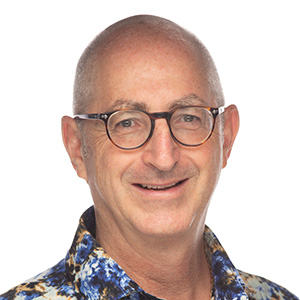 [Episode 130] Today’s episode is about the 2021 revision of the NASW Code of Ethics to include self-care and cultural humility. To unpack these two new additions, I spoke with


 , published by Columbia University Press. Dr. LaSala is director of the MSW program and associate professor at the School of Social Work at Rutgers University. He has been in practice for more than twenty-five years and he currently treats LGBT individuals and families at the Institute for Personal Growth in Highland Park, NJ. (


 Her book was endorsed by His Holiness the Dalai Lama. She holds a B.A. from Duke and an M.A. from Yale and teaches at the University of the Arts in Philadelphia, Pennsylvania. You can read more about her work at her website, http://www.eileenflanagan.com.


