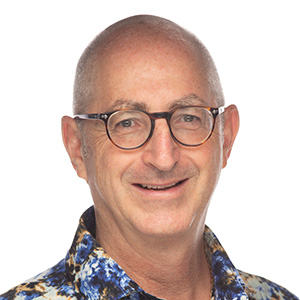
Thank you to Elizabeth Gillette for coordinating and being part of the interview.
Download MP3 [23:39]
Provides information on all things social work, including direct practice (both clinical and community organizing), research, policy, education... and everything in between.
Thank you to Elizabeth Gillette for coordinating and being part of the interview.
Download MP3 [23:39]
[Episode 137] In today's Social Work Podcast, I speak with ChatGPT-4o about the role of AI in child welfare and community organizing and how we can use Bronfenbrenner's ecosystems framework and an antiracist perspective. That's right. I'm interviewing OpenAI's LLM, ChatGPT-4o.
On May 13th, 2024, OpenAI released the Omni version of ChatGPT4. This was a big step forward in processing speed. You could input video audio sort of visuals data all sorts of things and it could analyze it almost in real time. I've been playing around with ChatGpt-4, the earlier version, and you know talking to it on the app and there was always a significant delay as it was thinking through things and kind of coming up with a response. But the Omni version, the response is basically in real time, and I thought what better moment than now to interview ChatGPT, because you'll hear a little bit of the thinking, right? It’ll be a slight delay but no more than you would for any live human guests on the social work podcast.
Unlike a human guest, I didn't have to coordinate schedules. All I did was I took my phone, I clicked on the app, I hit the little headset icon which activated the voice input, and I held up my phone to my microphone so that I was recording my voice like I am now, and then ChatGPT just coming right out of my phone into the speaker. So, it's good audio. it's not rich deep audio like I like to have, but you know when you record over Zoom or Skype or any of the other things that I've done in the past again it's not pristine audio either, but it's pretty good
This is the first time I've interviewed a chatbot. I'd love to hear your thoughts about the interview. Please text me or leave a voicemail for me at (215) 948-2456. If you leave a voicemail, please let me know if you're ok with me including your message as part of a follow-up podcast episode.
Download MP3 [31:02]
[Episode 130] Today’s episode is about the 2021 revision of the NASW Code of Ethics to include self-care and cultural humility. To unpack these two new additions, I spoke with Allan Barsky, Professor of Social Work at Florida Atlantic University and former Chair of the National Ethics Committee of the National Association of Social Workers. Allan Barsky received his Ph.D. from the University of Toronto Faculty of Social Work, his MSW from the Wurzweiler School of Social Work at Yeshiva University, and his Juris Doctor from the University of Toronto Faculty of Law. His teaching and research interests include social work practice theory and skill development, pedagogy, conflict resolution, professional ethics, and substance abuse. His book credits include Ethics and Values in Social Work (Oxford University Press), Clinicians in Court (Guilford Press), Conflict Resolution for the Helping Professions (Oxford University Press), Interprofessional Practice with Diverse Populations (Greenwood), Successful Social Work Education: A Student’s Guide (Cengage), and Alcohol, Other Drugs and Addictions (Cengage). Dr. Barsky was awarded the “Distinguished Teacher of the Year” by CDSI students in 2005 and 2020, the “Researcher of the Year – Scholarly and Creative Works” by FAU in 2007, and FAU Scholar of the Year in 2020. Dr. Barsky chaired the National Association of Social Workers “Code of Ethics Review Committee” (2016-2017) and was awarded NASW’s “Excellence in Ethics Award” (2015).
Download MP3 [33:40]