Showing posts with label LGBTQ. Show all posts

Tuesday, February 21, 2023

The Emotional Lives of Teenagers (Part 1): Interview with Lisa Damour, PhD

Photo of Lisa Damour, PhD

[Episode 134] Today’s episode is the first of a two-part series with Lisa Damour about her 2023 book, The Emotional Lives of Teenagers: Raising Connected, Capable, and Compassionate Adolescents. In today’s episode we talk about the difference between adolescent distress and adolescent mental illness, how the COVID-19 pandemic made it more difficult for parents to distinguish between normative adolescent distress or pandemic-related mental health concerns. She talks about the most destructive myth that is out there about adolescent mental health and what we as parents, professional and a society can do about that. Along the way Lisa shared some practical tips about to manage a teenage meltdown, a story about swimming pools, and she encourages us to think critically about the research that is being done on adolescent mental health and how the news media is portraying adolescent distress. 


In Part 2, we’ll talk about how decades of research on the gender binary can provide insight into the emotional lives of adolescents across the gender spectrum. We’ll talk about intersection of race and gender. We’ll end our conversation talking about how it is important to help teens express their emotions, but perhaps more important to help them regain control.

Download MP3 [31:38]

Wednesday, May 26, 2021

Self-care and Cultural Humility in the 2021 NASW Code of Ethics: Interview with Allan Barsky, MSW Ph.D.

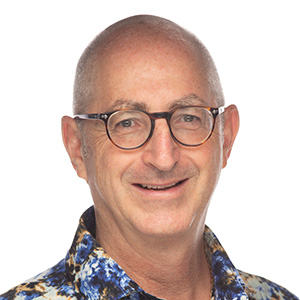
Allan Barsky [Episode 130] Today’s episode is about the 2021 revision of the NASW Code of Ethics to include self-care and cultural humility. To unpack these two new additions, I spoke with Allan Barsky, Professor of Social Work at Florida Atlantic University and former Chair of the National Ethics Committee of the National Association of Social Workers. 

Bio [CV]

Allan Barsky received his Ph.D. from the University of Toronto Faculty of Social Work, his MSW from the Wurzweiler School of Social Work at Yeshiva University, and his Juris Doctor from the University of Toronto Faculty of Law. His teaching and research interests include social work practice theory and skill development, pedagogy, conflict resolution, professional ethics, and substance abuse. His book credits include Ethics and Values in Social Work (Oxford University Press), Clinicians in Court (Guilford Press), Conflict Resolution for the Helping Professions (Oxford University Press), Interprofessional Practice with Diverse Populations (Greenwood), Successful Social Work Education: A Student’s Guide (Cengage), and Alcohol, Other Drugs and Addictions (Cengage). Dr. Barsky was awarded the “Distinguished Teacher of the Year” by CDSI students in 2005 and 2020, the “Researcher of the Year – Scholarly and Creative Works” by FAU in 2007, and FAU Scholar of the Year in 2020. Dr. Barsky chaired the National Association of Social Workers “Code of Ethics Review Committee” (2016-2017) and was awarded NASW’s “Excellence in Ethics Award” (2015).

Download MP3 [33:40]

Monday, November 2, 2015

Becoming a Clinical Social Worker: Interview with Dr. Danna Bodenheimer

[Episode 99] Today’s episode of the Social Work Podcast is about becoming a clinical social worker. My guest, Dr. Danna Bodenheimer, is the author of Real World Clinical Social Work: Find Your Voice and Find Your Way published by New Social Worker Press.


Download MP3 [35:48]

In today's interview Danna and I talk about what makes a social worker a clinical social worker, what distinguishes a good from a bad clinical social worker, the one essential thing that all social workers bring to supervision, and the role of narcissism, observing ego, transference, counter-transference and the real relationship in clinical social work. We end with a discussion of money and how social workers need to earn enough so they can be present with their clients.

Thursday, May 19, 2011

National Runaway Switchboard: Interview with Maureen Blaha

[Episode 67] Today's episode of the Social Work Podcast is an interview with Maureen Blaha, the Executive Director of the National Runaway Switchboard (http://www.1800runaway.org). So, if you're a social worker and you work in outpatient or inpatient or residential or you're in a school-based setting and you have a client who says I'm out of here. I am running away from home or maybe they don't even say I'm out of here. Maybe they're saying I don't know how I can live with my parents here. So, what do you do? What are some resources for you? If you're in a school setting and you're working with groups of kids, are there curricula that you can get a hold of, free curricula that you can use with your clients?

Monday, April 4, 2011

Coming Out, Coming Home: Interview with Michael C. LaSala, Ph.D.

[Episode 66] Today's Social Work Podcast is about helping families adjust to a gay or lesbian child. According to the website, comingoutcominghome.com, "The discovery that a child is gay or lesbian can send shockwaves throughout a family. A mother will question how she's raised her son; a father will worry that his daughter will experience discrimination. From the child's perspective, gay and lesbian youth fear their families will reject them, and that they will lose financial and emotional support. All in all, learning a child is gay challenges long held views about sexuality and relationships, and the resulting uncertainty can produce, for all parties, anger, resentment, and concern for safety and acceptance." So, how can social workers help families adjust to a gay or lesbian child?

To get some answers, I spoke with Dr. Michael LaSala author of the 2010 book, Coming Out, Coming Home: Helping Families Adjust to a Gay or Lesbian Child, published by Columbia University Press. Dr. LaSala is director of the MSW program and associate professor at the School of Social Work at Rutgers University. He has been in practice for more than twenty-five years and he currently treats LGBT individuals and families at the Institute for Personal Growth in Highland Park, NJ. (http://www.ipgcounseling.com/). Dr. LaSala recently completed a Fulbright Fellowship in Estonia where he investigated the impacts of stigma on Estonian lesbians and gay men. In addition to his book and numerous scholarly publications, you can read his blog on Gay and Lesbian Well-Being on PsychologyToday.com

Friday, November 5, 2010

Concerns of Parents of Lesbians and Gays: Interview with Cynthia Conley, Ph.D.

Risk for suicide among gay youth has caught a lot of attention in the American media as of late. There have been a number of youth who have been bullied because they have been gay or perceived to be gay and who have consequently died by suicide. Dan Savage and friends and colleagues and supporters have put together an amazing project called "It Gets Better" (http://www.itgetsbetterproject.com/) focusing on the issue of youth suicide for gay, lesbian, bisexual, transgender, question and queer teens.

Now there is good reason for this. According to the U.S. Government’s Report of the Secretary's Task Force on Youth Suicide, gay and lesbian youth bear an increased risk of suicide, substance abuse, school problems, and isolation because of a "hostile and condemning environment, verbal and physical abuse, rejection and isolation from [peers and family]" (Gibson, 1989). Social worker and pioneer gay and lesbian researcher Caitlin Ryan, found that lesbian, gay, and bisexual young adults who reported higher levels of family rejection during adolescence were 8.4 times more likely to report having attempted suicide, 5.9 times more likely to report high levels of depression, 3.4 times more likely to use illegal drugs, and 3.4 times more likely to report having engaged in unprotected sexual intercourse compared with peers from families that reported no or low levels of family rejection (Ryan, Huebner, Diaz, & Sanchez, 2009).

So, here’s the thing. Families who reject their kids are doing their kids a huge disservice. And that’s the point of today’s podcast. Today I’m talking with Dr. Cynthia Conley about the concerns of heterosexual parents of gay and lesbian youth.